

The Entry Model
The Simplest Way to Trade Failed Breakdowns

One setup — Master it Completely
Barky’s LTF DEM - a failure swing that traps sellers at a pre-planned level
The model is favourable by design
The only job is to execute it and let the data hold you to it.

This is the third article in Barky’s Final Guide series.
What is the LTF DEM
LTF stands for Lower Timeframe, DEM means Diagonal Entry Model.
It is a fractal-based reversal strategy that identifies hourly failure swings and defines risk on the 5 and 2 minute timeframes.
The model requires a bear trap — a false breakdown that traps sellers — to increase the probability of buy-stop orders clustering just above the entry level. It is a simple repeatable strategy that gives explosive entry breakouts when all requirements are met.
Setup Mechanism
When sellers attempt to flush a key level, it marks an hourly breakdown or continuation attempt. As soon as the initial breakdown finds a temporary low, price bounces and identifies where buyers are located. This bounce pivot becomes the key level.
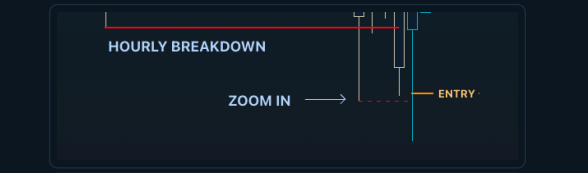
On the 5-minute timeframe, the breakdown is a downtrend. The exhaustion bounce forms a setup low and a lower high into a trending EMA9 — a bullish counter-trend swing that becomes the setup.
How to Succeed in Trading
One Setup — Master It Completely — Trade Only That
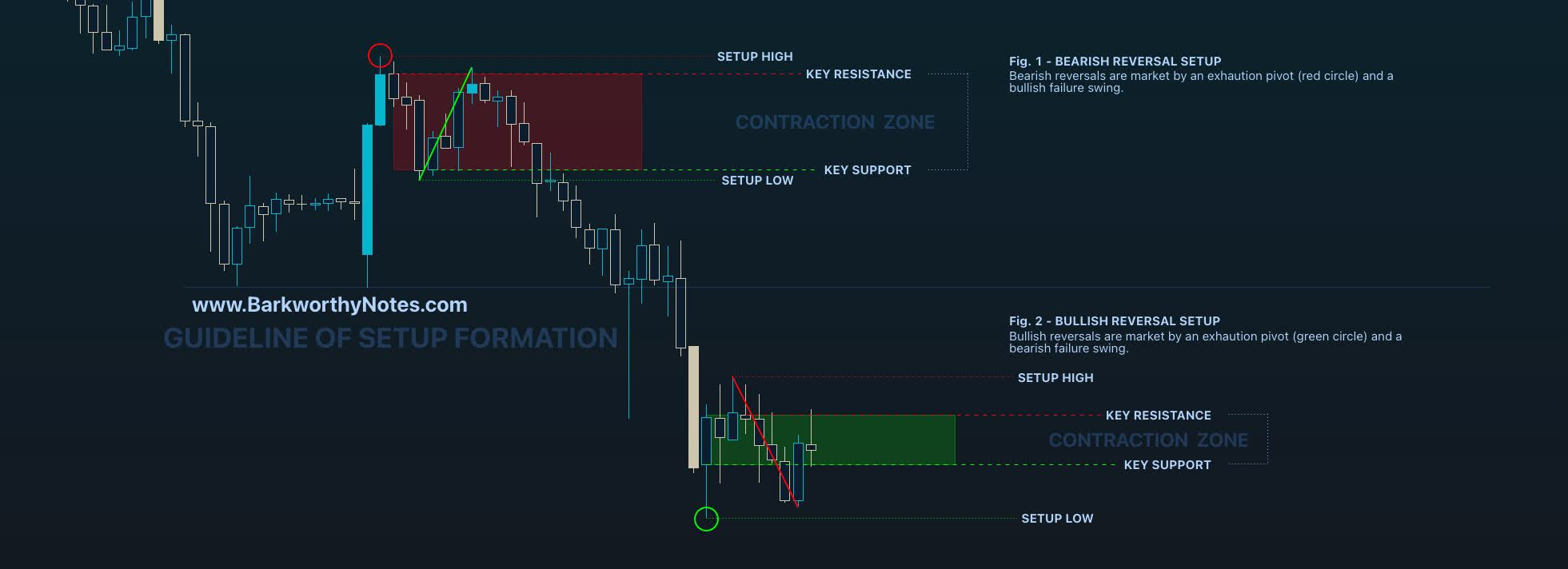
The Guideline of Setup Formation
In the first two articles we have examined trend structure and swings. This third article in Barky’s Final Guide series explains how to execute the setup.


Every setup — bullish or bearish — has the same skeleton: an exhaustion pivot (the circled extreme), a contraction zone boxed between key support and key resistance, and a failure swing inside it. For a bullish reversal: the green circle marks seller exhaustion, and the red line marks the bearish failure swing that traps them.
Accumulation — Manipulation — Distribution
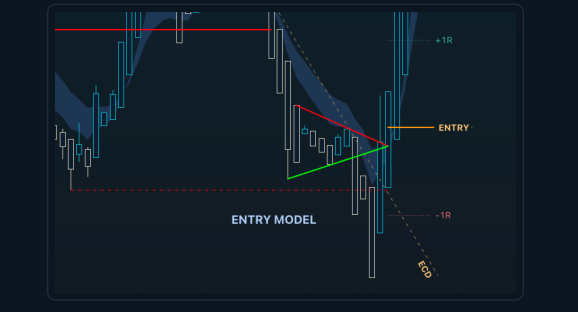
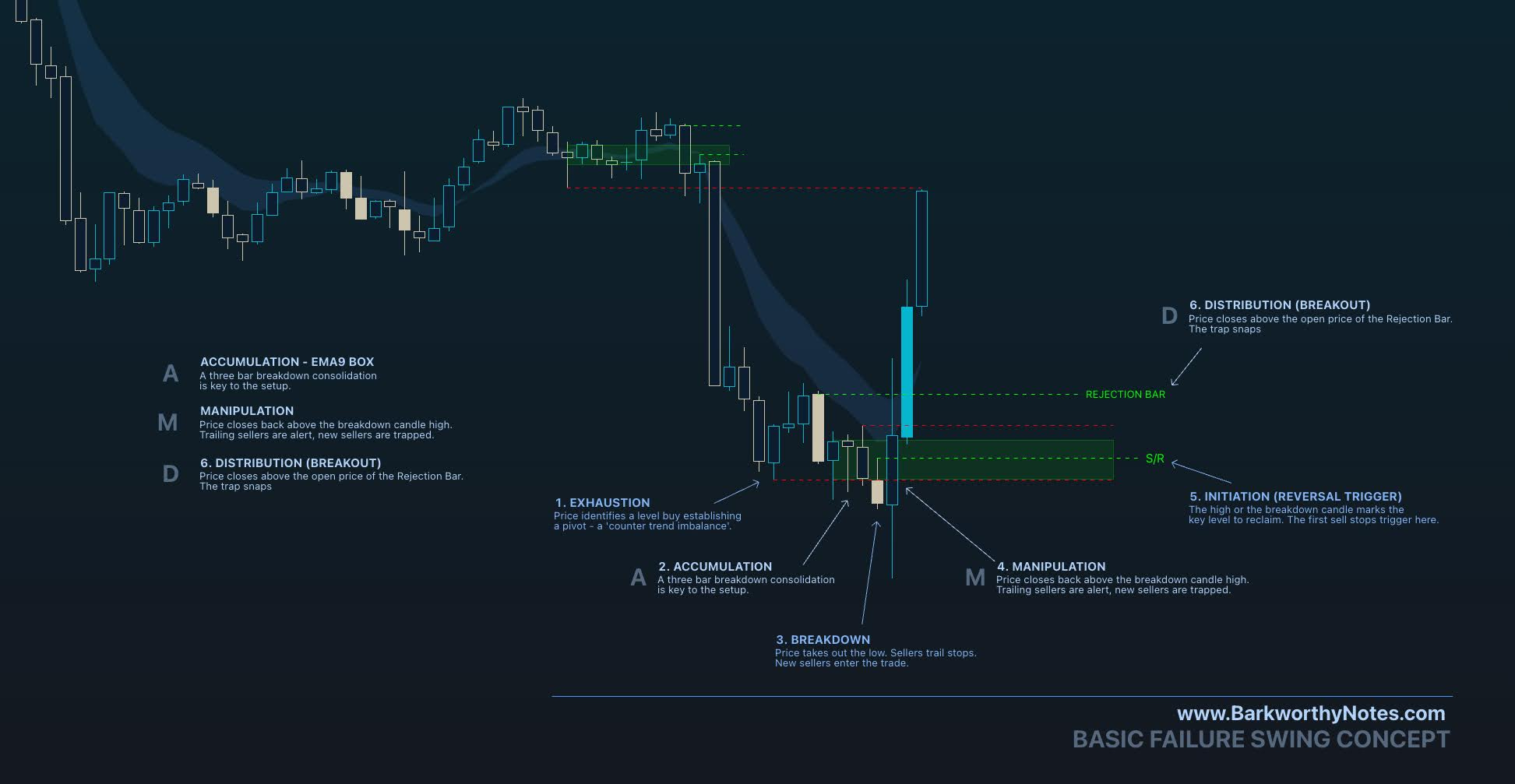
The DEM contraction (green box) is an accumulation range into a key support or resistance level. The manipulation is a sharp dip through the lower diagonal setup boundary that quickly reverses back inside, testing for remaining selling pressure (supply) before an uptrend phase begins.
Let the Higher Timeframe Lead
The strongest context is a higher-timeframe bullish swing met by a bearish rejection swing testing the low. As price attempts a new low, trailing stops get tightened while the reclaim traps new sellers.
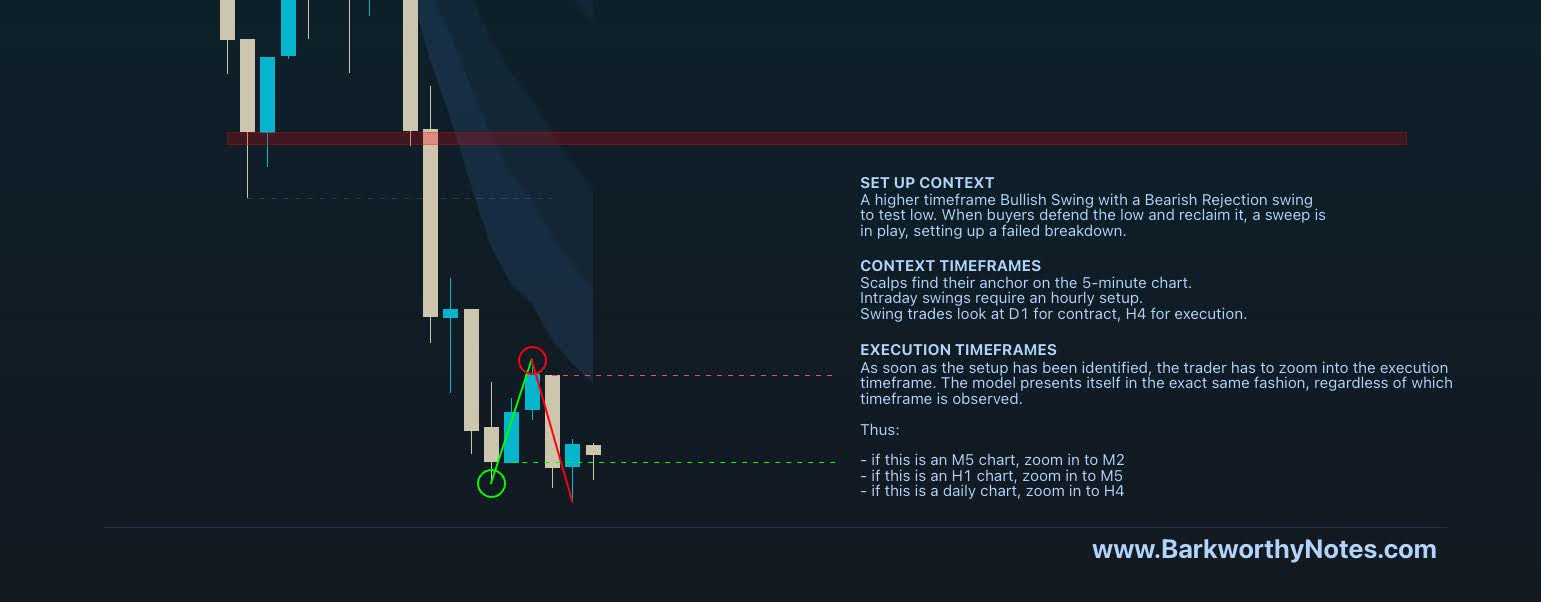
The sweep is causation. Without it, trailing stops remain above the setup high, and more consolidation remains in play. The breakdown attempt concentrates more stops in the same zone, forming a larger stop cluster. That cluster becomes the contraction spring — it holds the energy that breaks out the LTF DEM reversal as the first sellers cut their losses near the setup low. It is therefore key to wait for the higher timeframe context requirement to be met.
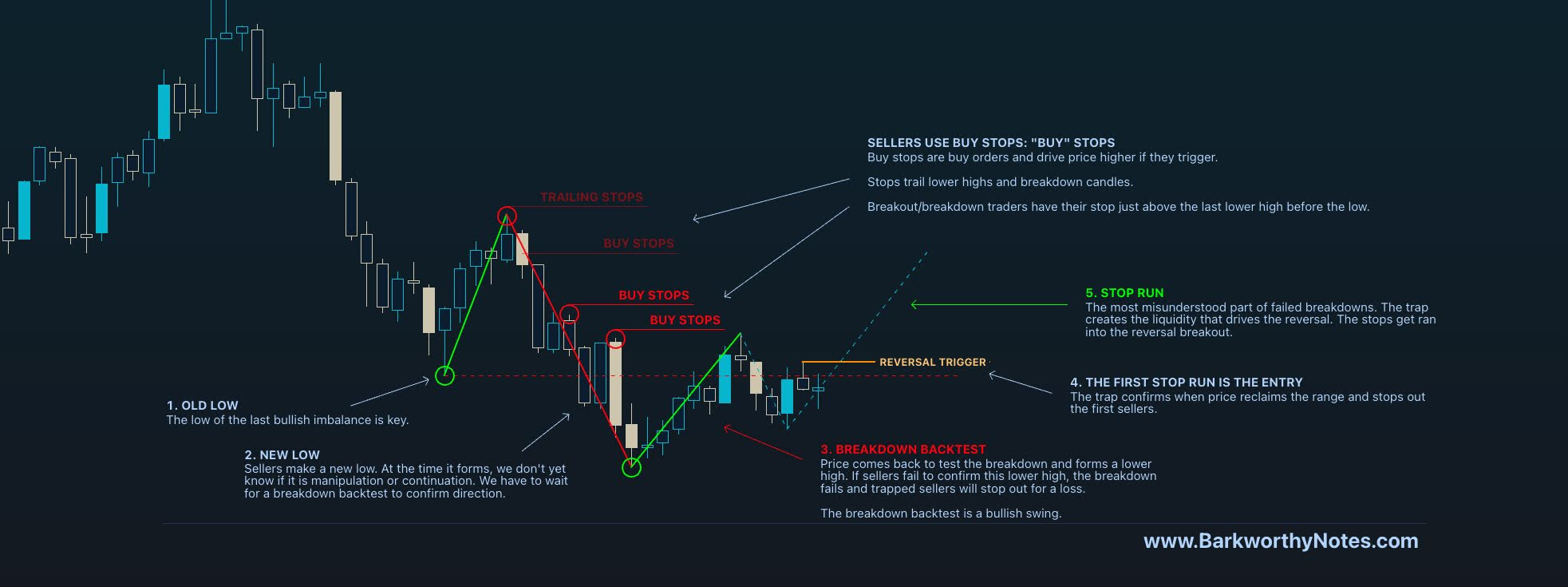
From Context to Execution (Zooming In)
Trades have to be taken against the levels the context timeframe provided, but the execution timeframe forms its own breakdown contraction into that higher-timeframe key support level. This contraction forms the Diagonal Entry Model, a repeatable concept with defined edges that allow the trader to pinpoint exactly where the setup triggers and where it fails — entry and stop levels that define risk and setup geometry for target projection.